Best Mosquito Repellents for Camping, Blackouts & Outdoor Survival (2026)
Looking for the best mosquito repellents for camping, hiking, blackouts, backyard use, or emergency preparedness? We compared the most effective options including Picaridin, DEET, Thermacell devices, IR3535, and Oil of Lemon Eucalyptus to determine which products actually work.
This post contains affiliate links. I may earn a small commission at no extra cost to you. Learn more.
Mosquitoes become far more than just an annoying summer problem during long power outages. Once air conditioning shuts down, fans stop working, windows stay open longer, and standing water builds around neighborhoods, mosquito populations can explode fast during hot-weather blackouts.
In prolonged outages, mosquito control becomes part of staying healthy, sleeping comfortably, and avoiding constant irritation when normal living conditions break down.
This guide compares the best mosquito repellents available in 2026, including sprays, Thermacell devices, and natural alternatives.
Whether you’re sheltering at home during a blackout or trying to stay comfortable at a remote campsite, these are the mosquito protection options worth relying on in 2026.
Bug control is just one part of staying functional outdoors. For a complete survival setup, see the Emergency Preparedness Plan.
Best Mosquito Repellents at a Glance
| Product | Best For | Active Ingredient | Protection Time |
|---|---|---|---|
| Sawyer 20% Picaridin | Best Overall | 20% Picaridin | Up to 12 Hours |
| Thermacell Backpacker 2.0 | Campsites & Blackouts | Allethrin Mat System | 15×15 Foot Protection Zone |
| Coleman IR3535 | Families & Sensitive Skin | 20% IR3535 | Up to 8 Hours |
| Off! Deep Woods | Heavy Mosquito Areas | 25% DEET | Up to 10 Hours |
| Repel Oil of Lemon Eucalyptus | Best Natural Option | 30% OLE | Up to 6 Hours |
Why Mosquitoes Become Miserable During Summer Blackouts
Most people never think about mosquitoes as part of emergency preparedness until the power actually goes out during extreme summer heat.
Once air conditioning stops working, people start opening windows, sleeping outside rooms, spending evenings outdoors, and sitting on porches or patios trying to cool down. Fans stop circulating air, indoor humidity rises, and standing water around neighborhoods can quickly become mosquito breeding grounds after storms and heavy rain.
Even short blackouts can make sleeping difficult once mosquitoes begin swarming around bedrooms, garages, tents, or backyard shelters. Longer outages become even worse once trash buildup, drainage problems, and stagnant water start increasing around homes and neighborhoods.
Good mosquito control during a blackout is not just about comfort. It helps protect sleep, morale, sanitation, and overall quality of life during extended emergencies.
How to Sleep Without Mosquitoes During a Summer Blackout
Sleeping becomes one of the hardest parts of a prolonged summer blackout once indoor temperatures rise and mosquitoes begin swarming around open windows, garages, tents, or backup sleeping areas.
Many families underestimate how exhausting multiple nights of heat, humidity, and mosquito bites can become during extended outages. Poor sleep lowers morale fast and makes every other emergency problem feel worse.
Small battery-powered fans, mosquito netting, Thermacell devices, and long-duration repellents can dramatically improve sleeping conditions when normal cooling systems stop working.
Sanitation problems can also make summer outages much worse once standing water and waste buildup begin increasing around neighborhoods. See our Emergency Toilet & Sanitation Setup During a Blackout guide.
For more hot-weather survival strategies, see our guide on how to stay cool without power during a blackout.
Below are our picks for the five best mosquito sprays—covering a range of active ingredients, application styles, and durations. Each entry includes key specs, pros & cons, and ideal scenarios.
How We Chose the Best Mosquito Repellents
We evaluated each repellent based on protection time, active ingredients, ease of application, effectiveness during camping and blackout situations, gear compatibility, and overall value. Products that offered long-lasting protection without damaging outdoor equipment received higher rankings.
Best All-Day Mosquito Protection for Summer Blackouts
Sawyer 20% Picaridin Spray
Active Ingredient: 20% Picaridin
Protection Time: Up to 12 hours (mosquitoes), 8 hours (ticks)
Application Feel: Dries “dry” within about 60 seconds; no greasy residue
- Pros:
- Long-lasting protection—12 hours without reapplication.
- Odorless and non-greasy, so you can sweat and stay active without reapplying.
- Safe on synthetic fabrics and plastics—won’t harm your sunglasses, GPS, or gear.
- Approved for children ≥ 2 years and pregnant users.
- Cons:
- Higher price point than basic DEET options.
- Fine mist can feel cold when sprayed directly on skin.
- Ideal For: Multi-day backpacking, long hikes, or any situation where you can’t stop to reapply multiple times.
Buy Sawyer 20% Picaridin on Amazon →
Best Heavy-Duty Mosquito Repellent for Swamps & Humid Conditions
For hot, humid conditions, a long-lasting DEET or Picaridin repellent is usually the strongest choice because protection needs to hold up through heavy mosquito pressure, heat, and sweating.
Off! Deep Woods (25% DEET)
Active Ingredient: 25% DEET
Protection Time: Up to 10 hours (mosquitoes), 8 hours (ticks)
Application Feel: Fine mist goes on wet, dries quickly to a matte finish
- Pros:
- Broad spectrum against mosquitoes, ticks, and other biting insects.
- Water- and sweat-resistant—even if you’re perspiring heavily.
- Non-aerosol pump version available, eliminating propellants.
- Cons:
- Distinct DEET odor (though milder here than in 50% formulas).
- Can degrade plastics, spandex, and nylon if sprayed directly on gear or sunglasses.
- Ideal For: Thick brush, swamps, or areas notorious for both mosquitoes and ticks—anywhere you need a time-tested repellent you can rely on.
Buy Off! Deep Woods on Amazon →
Best Natural Mosquito Repellent for Skin
For people looking for a plant-based mosquito repellent for exposed skin, Oil of Lemon Eucalyptus (OLE) is one of the strongest options. A 30% OLE formula can provide several hours of mosquito protection, although it generally requires more frequent reapplication than long-lasting Picaridin or DEET products.
Repel Plant-Based Oil of Lemon Eucalyptus (30% OLE)
Active Ingredient: 30% Oil of Lemon Eucalyptus (p-menthane-3,8-diol)
Protection Time: Up to 6 hours (mosquitoes)
Application Feel: Smooth, light citrus scent; dries to a slightly tacky finish
- Pros:
- EPA-approved plant-based formula—no synthetic chemicals.
- Mild citrus fragrance—no strong “chemical” smell.
- Won’t damage fabrics, gear, or plastics.
- Cons:
- Requires reapplication every 4–6 hours (especially if sweating).
- Not recommended for children under 3 years old.
- Limited efficacy against ticks—pair with a tick-specific product if needed.
- Ideal For: Day hikes, backyard gatherings, or short camping trips where you prefer a natural, plant-derived solution.
Buy Repel OLE on Amazon →
Best Mosquito Repellent for Families & Sensitive Skin
Coleman IR3535 Spray
Active Ingredient: 20% IR3535 (Ethyl Butylacetylaminopropionate)
Protection Time: Up to 8 hours (mosquitoes), 6 hours (ticks)
Application Feel: Completely dry on skin within seconds; virtually odorless
- Pros:
- Gentle on skin—approved for children ≥ 6 months (check label).
- No greasy or sticky residue.
- No threat to plastics, synthetic fabrics, or watch crystals.
- Repels mosquitoes, ticks, black flies, and more.
- Cons:
- May require mid-day reapplication in very hot, humid climates.
- Pricier than generic DEET sprays.
- Ideal For: Families with young kids, users with sensitive skin, or anyone who dislikes strong odors—even during longer backyard BBQs or kids’ sports events.
Buy Coleman IR3535 on Amazon →
Best Long-Lasting Lotion for Extended Blackouts
Sawyer Controlled-Release DEET Lotion (20% DEET)
Active Ingredient: 20% DEET (encapsulated, slow-release)
Protection Time: Up to 11 hours (mosquitoes), 10 hours (ticks)
Application Feel: Lotion that rubs in like sunscreen—no greasy film
- Pros:
- Encapsulated DEET releases gradually—steady protection hours after application.
- Minimal DEET odor compared to standard lotions or sprays.
- Easy to apply evenly—fewer missed spots, making it kid-friendly.
- Less likely to stain clothing or gear, since it’s a lotion.
- Cons:
- Requires rubbing in—takes a bit more time than a quick spray.
- Lower water resistance—avoid swimming or heavy sweating without reapplication.
- Ideal For: Parents who need an easy, even application for children, or anyone who dislikes spraying—great for family camping outings.
Buy Sawyer DEET Lotion on Amazon →
Best Hands-Free Mosquito Protection for Campsites & Porches
While the sprays above cover on-skin protection, a Thermacell device creates a hands-free, area-wide “bubble” of protection—ideal for stationary settings. Below is an overview:
How Thermacell Devices Work During Power Outages
- A compact butane cartridge powers a heater inside the unit.
- A replaceable repellent mat (impregnated with allethrin, a chrysanthemum-derived compound) slides in.
- When heated, the mat releases a fine vapor that radiates into a roughly 15 × 15-foot zone, repelling mosquitoes and other flying insects.
Advantages
- Hands-Free Operation: Simply turn it on—no need to reapply anything to your skin.
- No Residue or Scent on Skin: Keeps you odorless while you cook, read, or relax.
- Lightweight & Portable: The Backpacker 2.0 model weighs under 3 oz (with cartridge), making it perfect for tent-side or picnic use.
Limitations
- Stationary Coverage: If you move outside the ~15 × 15-ft radius (especially in moderate wind), you’re no longer protected.
- Consumables Cost: Butane cartridges last ~12 hours; repellent mats last ~4 hours each—plan for extras on multi-day trips.
- Not for On-the-Move Use: Hikers and bikers still need a topical spray for any portion of the trip spent away from camp.
Recommended Thermacell Models for 2026
- Thermacell Backpacker 2.0: Weighs 2.8 oz (with cartridge), up to 12 hours per butane canister, compact for backpacking.
- Thermacell Radius Zone: Covers ~20 × 25 ft for larger groups—ideal around a big campsite cooking area, though bulkier (≈ 8 oz).
Buy Thermacell Backpacker 2.0 on Amazon →
Best Thermacell Alternatives
If you don’t want to rely on a Thermacell, the best alternative depends on whether you need personal protection or protection around a campsite or patio. Picaridin and DEET sprays provide reliable protection while you’re moving, while mosquito netting and fans can protect sleeping or sitting areas without requiring repellent on your skin.
- Picaridin spray: Best alternative when hiking, working, or moving around outside.
- DEET repellent: A strong choice for heavy mosquito pressure, swamps, and wooded areas.
- Mosquito netting: Useful around beds, hammocks, tents, and emergency sleeping areas.
- Portable fans: Helpful around patios and campsites because steady airflow makes it harder for mosquitoes to land.
For camping, a topical repellent such as Picaridin is usually the most practical Thermacell alternative because it continues protecting you when you leave the campsite or move outside a fixed protection zone.
Best Mosquito Repellent for Camping
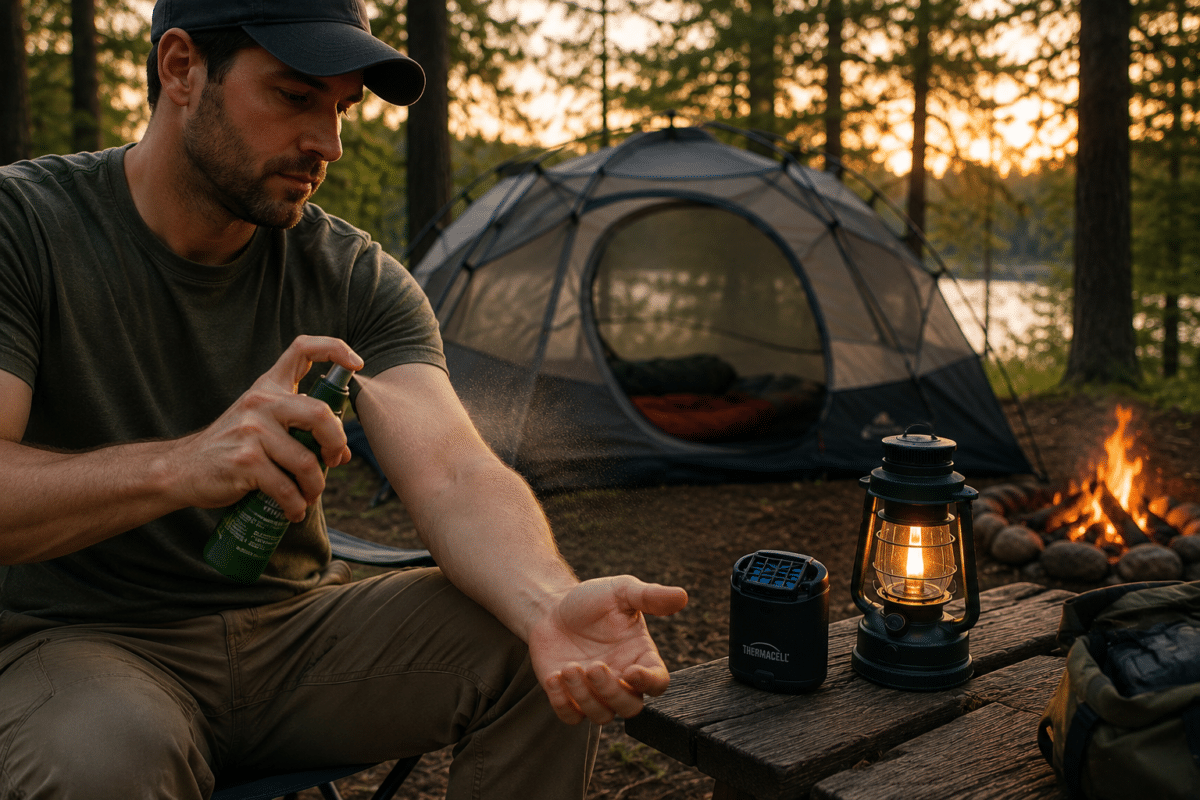
The best mosquito repellent for camping depends on how you spend your time outdoors. Backpackers and hikers typically benefit most from long-lasting Picaridin sprays because they provide protection while moving. Campers spending evenings around campfires or picnic tables often benefit from combining a Thermacell device with a quality spray for both personal and area-wide protection.
For most camping situations, Sawyer 20% Picaridin and the Thermacell Backpacker 2.0 offer one of the strongest combinations of protection available.
Best Natural Oils for Off-Grid Mosquito Control
For those seeking fewer synthetic chemicals or an eco-friendly approach, natural repellents and essential oils offer varying degrees of protection. Below are the most studied options and how to use them effectively.
Oil of Lemon Eucalyptus (OLE)
Efficacy: Up to 4–6 hours of protection at 30% concentration—comparable to a 15–20% DEET formula in moderate mosquito pressure.
Pros: EPA-approved plant-based repellent; minimal synthetic chemicals; light citrus scent.
Cons: Not for children under 3; needs reapplication every 4–6 hours; limited tick efficacy.
Buy Oil of Lemon Eucalyptus on Amazon →
Citronella Oil (Cymbopogon spp.)
Efficacy: Approximately 1–2 hours of protection when applied undiluted; often blended with other oils or fixatives (e.g., vanillin) to extend duration.
Pros: Pleasant lemony scent; common in candles, torches, and sprays.
Cons: Evaporates quickly; requires frequent reapplication; low single-oil efficacy against aggressive species.
Buy Citronella Oil on Amazon →
Lavender Oil (Lavandula angustifolia)
Efficacy: Provides 2–3 hours of repellency when combined with other oils (e.g., citronella, geraniol); limited effectiveness alone.
Pros: Soothing fragrance; gentle on skin when diluted.
Cons: Insufficient as a standalone repellent; best used as part of a blend.
Buy Lavender Oil on Amazon →
Neem Oil (Azadirachta indica)
Efficacy: Moderate protection (~3–4 hours) in tropical regions; variable results across mosquito species.
Pros: Repels multiple insect types (mosquitoes, ticks, fleas); biodegradable.
Cons: Strong, oily odor; can stain fabrics; potential skin irritation if not diluted properly.
Buy Neem Oil on Amazon →
Peppermint Oil (Mentha × piperita)
Efficacy: Up to 1–2 hours of repellency when applied at 5–10% concentration; also deters ants, spiders, and other pests.
Pros: Cooling sensation on skin; versatile for multiple insect deterrence.
Cons: Short-lived; must be diluted to avoid irritation; requires frequent reapplication.
Buy Peppermint Oil on Amazon →
Geraniol (Pelargonium graveolens)
Efficacy: Can repel mosquitoes and ticks for 2–3 hours at 5–10% concentration; often used in combination blends.
Pros: Pleasant rose-like scent; can be blended for broader spectrum.
Cons: Inconsistent efficacy due to formulation variability; relatively costly compared to other oils.
Buy Geraniol on Amazon →
Formulation & Application Tips
- Concentration Matters: Essential oils must be diluted in a carrier oil (e.g., fractionated coconut oil) or in a standardized commercial formula (e.g., Repel OLE) to ensure consistent protection.
- DIY vs. Commercial Blends:
- DIY Sprays: Combine 15–30 drops of essential oil per ounce of carrier (vinegar, alcohol, or oil) for mild repellency (2–4 hours), but results vary widely.
- Pre-Formulated Products: Brands like Murphy’s Naturals or Burt’s Bees ensure proper emulsifiers and stabilizers, extending efficacy and reducing skin irritation.
- Reapplication Frequency: Plan to reapply every 2–4 hours—sooner if you’re sweating heavily or in direct sunlight.
- Layered Defense: Even with natural oils, consider permethrin-treated clothing (e.g., Sawyer Permethrin) for insect protection through fabric. Combine with a fan or netting for maximum comfort in camp.
Best Natural Mosquito Repellent for the Yard
Natural mosquito control in a yard works best when you combine repellents with methods that reduce the number of mosquitoes around the property. Citronella, geraniol, and other plant-based repellents may provide temporary protection around patios and seating areas, but they generally do not provide the same long-lasting protection as proven topical repellents.
Start by eliminating standing water in buckets, flowerpots, gutters, tarps, toys, and other containers where mosquitoes can breed. Around patios and outdoor seating areas, fans can also help because mosquitoes are weak fliers and have difficulty landing in steady airflow.
For evenings outside, a layered approach usually works better than relying on one natural product alone: remove standing water, use airflow around seating areas, and apply an effective skin repellent when mosquito pressure is high.
Sprays vs Thermacell vs Natural Repellents
| Feature | Topical Sprays/Lotions | Thermacell Device | Natural Oils |
|---|---|---|---|
| Method of Protection | Applied to skin (or clothing) | Area vapor dispersal (~15 × 15 ft) | Applied to skin, diluted in carrier |
| Coverage Space | Personal (only treated areas) | Fixed zone around the unit | Personal (only treated areas) |
| Duration (per application) | 6–12 hours, depending on formula | 4 hours per mat; 12 hours per butane canister | 1–6 hours (varies by oil & concentration) |
| Reapplication Needed | When labeled duration expires or after water exposure | Every 4 hours for mats; butane canister lasts 12 hours | Every 2–4 hours, or sooner if sweating |
| Feel on Skin | Varies: dry (picaridin/IR3535) to slightly tacky (DEET) | No direct contact | Can feel oily if high concentration; pleasant fragrance |
| Scent/Odor | Picaridin/IR3535: nearly odorless; DEET: chemical smell | No scent on skin; faint allethrin odor at device | Pleasant (citrus, lavender, peppermint) but can attract other insects |
| Gear Compatibility | Picaridin/IR3535: safe; DEET: may degrade plastics | N/A (no direct contact) | No damage to gear; may stain fabrics |
| Ideal Scenario | Hiking, running, moving terrain | Stationary or semi-stationary settings (camp, patio) | Backyard gatherings, short day trips, sensitive skin users |
| Cost Considerations | One bottle (200 ml) lasts many outings | Recurring mats & butane costs | DIY inexpensive; high-quality blends pricier than generics |
How to Choose the Right Mosquito Protection for Your Situation
With so many options, selecting the best repellent can be confusing. Here’s a simple decision tree:
- Activity Type:
- All-Day Hikes / Backpacking: Choose Sawyer 20% Picaridin Spray for 12-hour protection and non-greasy feel.
- Family Camping / Basecamp: Combine Coleman IR3535 (especially for kids) with a Thermacell Backpacker 2.0 at camp.
- Thick Brush / Tick-Heavy Areas: Opt for Off! Deep Woods (25% DEET) or Sawyer Controlled-Release DEET Lotion (20% DEET) for superior tick repellency.
- Short Trips / Backyard Gatherings: Use Repel OLE (30% Oil of Lemon Eucalyptus) for a plant-based solution; reapply every 4–6 hours.
- Hands-Free Camp Zone: Rely on a Thermacell Radius Zone around a picnic table or tent vestibule for 15 × 15-ft coverage.
- Sensitivity & Age:
- If you or your children have sensitive skin, or you’re pregnant, prioritize IR3535 (Coleman) or Picaridin over high-DEET formulas.
- For kids under 3, avoid OLE and stick to IR3535 (≥ 6 months) or Picaridin (≥ 2 years).
- Synthetic vs. Natural Preference:
- Synthetic: DEET (Off! Deep Woods or Sawyer Lotion) or Picaridin (Sawyer Spray) for heavy-infestation zones and long duration.
- Natural: OLE (Repel) for moderate outings; blends of citronella, lavender, or geraniol for short, casual events—always carry a backup synthetic in high-risk areas.
- Gear Considerations:
- If you’re carrying sensitive electronics or synthetic gear, avoid high-concentration DEET—opt for Picaridin or IR3535 instead.
- To protect clothing, treat it beforehand with Sawyer Permethrin—no need to spray directly onto gear during your trip.
What Is the Strongest Mosquito Repellent Available?
For most campers and outdoor users, Picaridin and DEET remain the most effective mosquito repellents available. Products containing 20% Picaridin can provide up to 12 hours of protection while remaining odorless and safe on gear. DEET-based repellents remain the gold standard for heavy mosquito pressure and areas where ticks are also a concern.
If you need maximum protection during camping trips, summer blackouts, hunting trips, or wilderness travel, a combination of Picaridin spray and a Thermacell device provides some of the most reliable mosquito protection available.
Picaridin vs DEET: Which Mosquito Repellent Works Better?
Picaridin and DEET are the two most effective mosquito repellents available today. Picaridin is odorless, non-greasy, and safe on plastics and synthetic gear, making it a favorite among campers and backpackers. DEET remains one of the most proven repellents ever developed and performs extremely well in areas with heavy mosquito and tick populations.
For most campers and outdoor enthusiasts, 20% Picaridin offers the best balance of comfort and protection. For extreme mosquito pressure or tick-heavy environments, DEET remains a strong option.
Frequently Asked Questions
Are natural oils as effective as DEET or Picaridin?
Natural oils like oil of lemon eucalyptus can approach 4–6 hours of protection at the correct concentration (30% OLE). However, most single essential oils (citronella, lavender, peppermint) only repel mosquitoes for 1–3 hours. For heavy-infection zones or extended outings, synthetics like 20% Picaridin or 25% DEET remain more reliable.
Can I use a Thermacell instead of a spray when hiking?
No. A Thermacell only protects the zone immediately around it (≈ 15 × 15 feet). If you step outside that radius, mosquitoes can bite. Always pair Thermacell with a topical repellent for any on-the-move activity.
Which repellent is safest for young children?
- IR3535 (Coleman): Approved for children ≥ 6 months.
- Picaridin (Sawyer 20%): Approved for children ≥ 2 years.
- DEET: Safe for children ≥ 2 months, but avoid concentrations > 30% on very young children.
- OLE (Repel): Not recommended for children < 3 years.
How often should I reapply OLE or IR3535?
- OLE (30%): Reapply every 4–6 hours, or sooner if you’re sweating heavily or swimming.
- IR3535 (20%): Often lasts 6–8 hours, but in hot, humid climates plan to reapply around the 5- to 6-hour mark.
Will DEET ruin my synthetic gear?
High concentrations of DEET (> 30%) can degrade nylon, spandex, plastics (sunglasses, GPS units), and watch crystals. If protecting gear is a priority, opt for Picaridin or IR3535 instead, as they are safe on synthetic materials.
Choosing the right mosquito protection during a blackout often comes down to balancing long-lasting protection, comfort, portability, and how much time you’ll realistically spend outdoors or without airflow.
Conclusion & Final Recommendations
Reliable mosquito control becomes far more important once summer heat, humidity, and prolonged power outages start affecting everyday life. The right combination of repellents, Thermacell devices, airflow, and protective clothing can dramatically improve comfort and sleep during long blackouts and off-grid situations.
- Best All-Day, On-the-Move Protection: Sawyer 20% Picaridin Spray (12-hour coverage, dry feel, gear-safe).
- Top Choice for Families & Sensitive Skin: Coleman IR3535 Spray (8-hour defense, virtually odorless, kid-friendly).
- Maximum Tick & Mosquito Efficacy: Off! Deep Woods (25% DEET) or Sawyer Controlled-Release DEET Lotion (20% DEET) for thick brush and heavy-infestation zones.
- Plant-Based Alternative: Repel Oil of Lemon Eucalyptus (30% OLE) for 4–6 hours of natural protection—best for short trips or backyard use.
- Hands-Free Camp/Patio Coverage: Thermacell Backpacker 2.0 (15×15-ft bubble, no skin contact) or Radius Zone for larger groups.
For the most comprehensive defense, combine a high-performance spray (e.g., Sawyer Picaridin) with a Thermacell device when you’re settled, plus permethrin-treated clothing to guard against bites through fabric.
If you prefer fewer synthetics, supplement essential oils like OLE or citronella with treated clothing and environmental controls (e.g., eliminating standing water, using fans at camp).
Whether you’re dealing with a neighborhood blackout, camping off-grid, or trying to stay comfortable during a prolonged summer emergency, reliable mosquito control becomes far more important than most people realize.
If you’re preparing for summer emergencies, see our guide on What Runs Out First During a Blackout.
Further Reading: Insects, Hygiene & Field Care
Expand your outdoor know-how with these related guides:
- DIY Bug Repellent: Natural Summer Protection That Works
- Treat Bug Bites Naturally While Camping
- How to Treat Your Gear with Permethrin
- The Ultimate Guide to Staying Fresh While Camping (No Shower? No Problem!)
- DIY Off-Grid Shower Setups for Summer Camping
Preparing for long summer blackouts takes more than bug spray alone. Explore our blackout survival guides covering backup power, emergency cooling, sanitation, water storage, and off-grid living strategies.