DIY Bug Repellent: Natural Summer Protection That Works
This post contains affiliate links. I may earn a small commission at no extra cost to you. Learn more.
DIY bug repellent is the best way to avoid itchy bites and harsh chemicals when you head outdoors. Summer is prime time for BBQs, hikes, and camping—but it also brings mosquitoes, ticks, gnats, and other pests. Summer is prime time for BBQs, hikes, and camping — but it also brings mosquitoes, ticks, gnats, and other pests. Most store-bought repellents use synthetic chemicals like DEET or permethrin, which can irritate your skin and harm the environment.
Grab the core ingredients now so you can mix your first batch in minutes:
That’s why many outdoor enthusiasts are switching to DIY bug repellent recipes made with natural ingredients. This guide breaks down everything you need to make your own bug repellents. We’ll cover essential oils that work, how to mix them, which pests they repel, and how to apply them safely.
✅ What You’ll Learn:
- Why Go Natural: Health and environmental reasons to skip synthetics
- How Natural Repellents Work: Why certain oils confuse or repel bugs
- Bug-Specific Blends: What ingredients work best for mosquitoes, ticks, flies, and gnats
- Safe Use: How and where to apply for maximum effect
- Avoiding Pitfalls: What not to mix or apply directly
- Kid & Pet Formulas: Safer versions for sensitive groups
- Easy DIY Recipes: Sprays, oils, and more you can make at home
- Quick Reference Table: Blends, uses, and safety notes in one glance
1. Why Go Natural? Health, Environmental, and Practical Benefits
1.1 Health Considerations
- Skin irritation: DEET and aerosols can trigger rashes, redness, or dizziness.
- Bioaccumulation: Some chemicals may build up with long-term use.
- Gentler options: Oils like lavender, citronella, and lemon eucalyptus are effective and skin-friendly when diluted properly.
1.2 Environmental Impact
- Water safety: Synthetics wash off and can pollute waterways.
- Air quality: Sprays with VOCs harm local air.
- Waste: DIY uses refillable, low-waste containers.
1.3 Customization & Cost Savings
- Choose your scent & strength.
- Dilute for kids or pets as needed.
- Buy once, blend many times.
2. How Natural Repellents Work
Essential oils disrupt insect olfactory receptors. Key compounds include:
- Citronellal — mosquito confusion (citronella)
- Eugenol — effective vs ticks & mosquitoes (clove)
- Limonene — gnat & fly repellent (citrus oils)
- 1,8-Cineole — mosquito shield (lemon eucalyptus)
- Azadirachtin — broad-spectrum (neem)
According to the CDC, lemon eucalyptus oil is a proven natural mosquito repellent and an effective alternative to low concentrations of DEET.
Carriers like witch hazel, alcohol, and fractionated coconut oil help disperse oils, slow evaporation, and reduce skin sensitivity.
3. Bug-Specific Blends
| Bug Type | Best Oils |
|---|---|
| Mosquitoes | Lemon eucalyptus, citronella, lavender |
| Ticks | Neem, cedarwood, geranium, rosemary |
| Flies | Peppermint, eucalyptus, basil, rosemary |
| Gnats/Midges | Lavender, citronella, lemongrass |
Tips:
- Use neem on clothing/gear (not skin).
- Avoid peppermint on pets.
- Combine oils for wider-spectrum protection.
4. Safe Use: When and Where to Apply
- Apply 10–15 mins before outdoor exposure.
- Reapply every 1–2 hours or after sweating/swimming.
- Focus on wrists, ankles, neckline, and clothing edges.
- Avoid eyes, broken skin, and sensitive areas.
- Test fabrics before spraying — especially synthetics.
5. What to Avoid
- Phototoxic oils: Citrus oils can increase sunburn risk.
- Overpowering blends: Clove/cinnamon can cause irritation at high concentrations.
- Unknown allergies: Always patch test.
- Improper storage: Use dark glass bottles, keep cool and out of light.
- Pet dangers: Never use tea tree, citrus, or peppermint on cats.
6. Kid & Pet-Safe Formulas
For Kids (2+)
- Use 0.5–1% essential oil total dilution.
- Safer oils: Lavender, chamomile, cedarwood.
Sample: 2 oz water + 1 tbsp witch hazel + 4 drops lavender + 2 drops cedarwood.
For Dogs
- Safe oils: Lavender, lemongrass, cedarwood (in small amounts).
- Spray lightly on collars/bandanas only.
- Avoid citrus, tea tree, peppermint.
7. DIY Recipes: Sprays, Oils & More
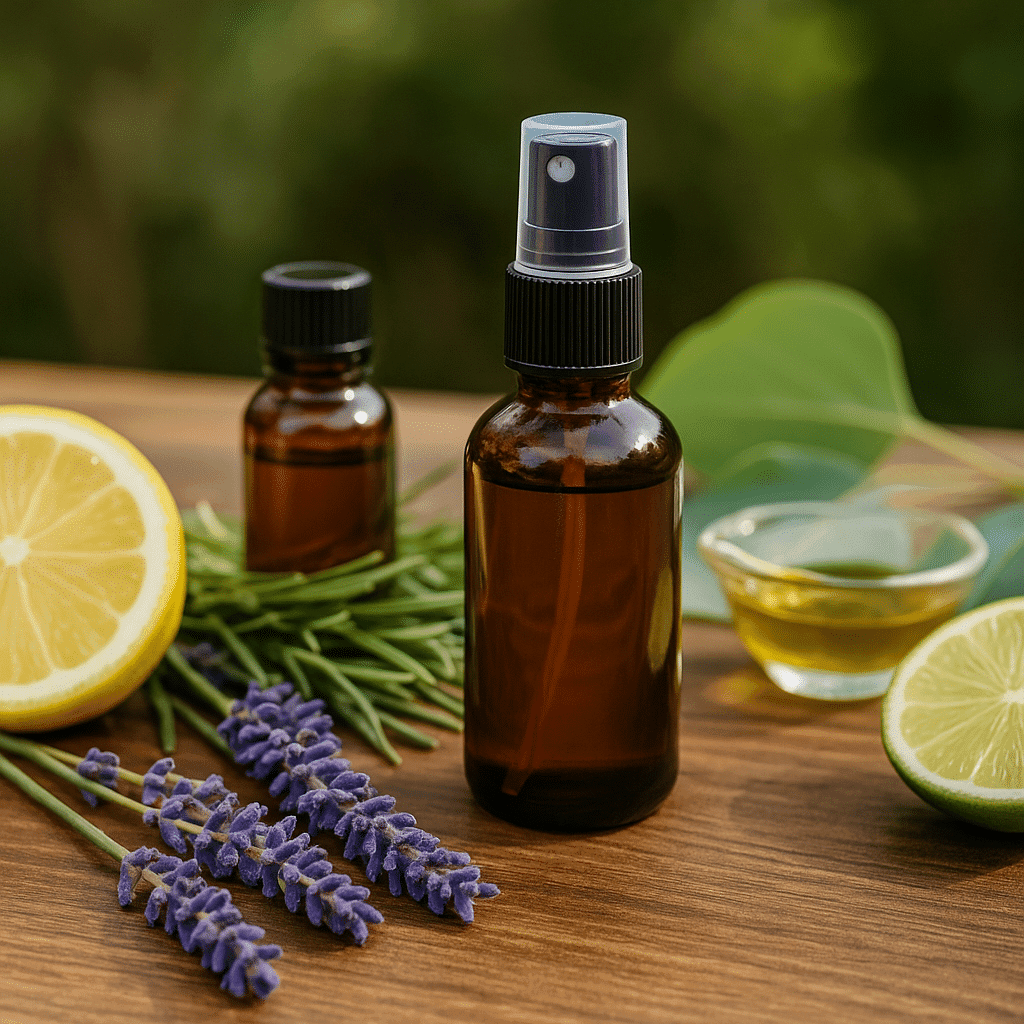
Start with clean tools and a sanitized workspace. Always use dark glass bottles to protect your oils from sunlight. Add your base (witch hazel, vinegar, or carrier oil) first, then add essential oils drop by drop. Shake thoroughly to blend. For water-based sprays, use distilled or previously boiled/cooled water. Store in a cool, dark place and label with the date and ingredients. Shake before each use.
7.1 Classic Spray Recipe (2 oz batch)
Ingredients:
- 10 drops citronella essential oil
- 10 drops lavender essential oil
- 5 drops tea tree oil (omit for children; optional)
- 1 tbsp witch hazel or vodka (helps disperse oils)
- 2 oz distilled water
- Optional: 1 tsp vegetable glycerin (slows evaporation)
Citronella Oil
Lavender Oil
Witch Hazel
Vegetable Glycerin
Dark Glass Spray Bottles
Instructions & Tips: Add witch hazel/vodka first, then essential oils; shake to disperse. Add water and optional glycerin, then shake again. Label with date. Store cool and dark. Use within 2–3 weeks for best potency. Apply to clothing or exposed skin — avoid face; spray into hands then rub along face perimeter.
7.2 Vinegar-Based Herbal Tincture (~1 cup finished)
Ingredients & Steps:
- 1 cup apple cider vinegar (unfiltered preferred)
- 1 tbsp each dried rosemary, mint, thyme, lavender (or fresh; lightly bruise herbs)
- 1 qt mason jar with lid
Instructions: Combine herbs and vinegar; seal jar. Store in a dark place for 2 weeks, shaking daily. Strain with fine mesh or cheesecloth. Transfer to a spray bottle; optionally dilute 1:1 with water. Refrigerate if diluting; use within 1–2 weeks. Undiluted tincture lasts 1–2 months when stored cool and dark. Add a few drops of lavender oil to boost performance.
7.3 Candle Repellent (~per candle)
Ingredients:
- Soy wax flakes or beeswax (~½ cup per small jar)
- Candle wick with base
- Essential oils: 10–15 drops citronella + 5 drops rosemary + 5 drops lemon eucalyptus
- Container: Mason jar, tin, or heat-safe vessel
Soy/Beeswax
Citronella Oil
Lemon Eucalyptus Oil
Buy Candle Wax on Amazon
Instructions: Melt wax in a double boiler. Remove from heat, cool slightly, then stir in essential oils. Secure wick, pour wax, let cool fully. Trim wick to ~¼”. Light outdoors at dusk; keep away from flammables. Extinguish before sleeping.
7.4 Mosquito-Repelling Body Oil
Ingredients:
- 2 oz fractionated coconut oil (light, non-greasy)
- 10 drops lavender essential oil
- 5 drops peppermint essential oil
- 5 drops geranium or lemon eucalyptus oil
Fractionated Coconut Oil
Lavender Oil
Lemon Eucalyptus Oil
Glass Dropper/Applicator Bottles
Buy Coconut Oil on Amazon
Instructions: Combine in a small glass bottle. Shake to mix. Apply sparingly to arms, legs, neck, ankles before outdoor exposure. For children: reduce total drops and omit peppermint if sensitive. Roller or dropper bottles make application easy.
8. Safety Tips
- Patch test first: Try a small area on your forearm to check for irritation.
- Follow dilution guidelines: 1–3% for adults, 0.5–1% for kids.
- Avoid eyes and broken skin: Apply around — not on — sensitive areas.
- Label your mixes: Write the date and ingredients on your bottle.
- Store properly: Use dark glass containers. Keep them cool and out of sunlight.
9. Quick Summary Table
Recommended Supplies (Quick Shop)
- Citronella Essential Oil
- Lavender Essential Oil
- Lemon Eucalyptus Essential Oil
- Witch Hazel
- Fractionated Coconut Oil
- Dark Glass Spray Bottles
- Glass Dropper Bottles
- Soy/Beeswax for Candles
- Vegetable Glycerin
Shop Bottles & Containers on Amazon
We’ve included affiliate links where available. If you purchase through these links, we may earn a small commission at no extra cost to you. Your support helps keep The Savvy Survivalist running strong.
Final Thoughts: Go Natural, Stay Protected
Bug bites shouldn’t be the price you pay for enjoying the outdoors. Natural bug repellents give you control over what you put on your skin and how you protect the environment around you. Start with a simple spray or oil, and build your own summer-ready lineup. Share this guide with fellow campers and homesteaders — and don’t forget to experiment until you find your favorite formula.
Stay safe, stay smart, and stay bite-free.
🔗 Related Post: Check out our guide to The Ultimate Guide to the Best Mosquito Repellents in 2025: Sprays, Devices, and Natural Options for more summer safety tips.